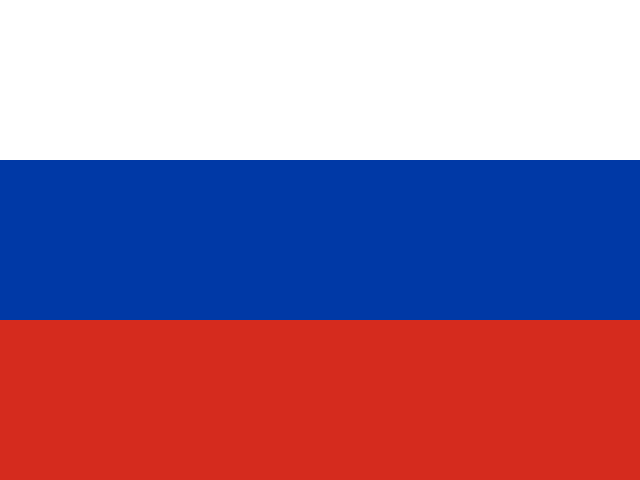
 Russia
 ranks #3 of 242 on the Composite Power Index (43.2/100), scored on military spending, active personnel, nuclear arsenal, economic size and logistics. Its Instability Index is 86.7/100 (#8 most fragile). Every figure below carries its source and year. Data read 2026-10-22.
Analyst briefing
Russia: Low Debt, High Burden, Hydrocarbon Dependence
Economic base
World Bank WDI data put Russian gross domestic product at about $2.17 trillion in 2024, across a population of roughly 143.5 million — some $14,889 per head on the same series. The economy is small relative to the military establishment it sustains, and that mismatch runs through everything below.
The sovereign balance sheet is unusually clean. IMF World Economic Outlook figures show general government debt at 19.1 percent of GDP in 2026, a low ratio by any standard. IMF International Financial Statistics report official reserves of $428.3 billion in 2025. The supplied data do not say how much of that total is accessible rather than immobilized abroad, which is a material omission for Russia specifically; the headline figure should not be read as freely usable liquidity.
Military weight
SIPRI's 2025 figures record military expenditure of $190.4 billion at 7.501 percent of GDP — a burden ratio several times what most large economies carry. Note that the dollar total and the GDP share rest on SIPRI's own national-accounts and exchange-rate conversions; dividing the spending figure by the 2024 World Bank GDP above produces a different ratio, and the two series should not be mixed. For Russia, where purchasing-power differences in domestic defense procurement are large, the dollar figure likely understates real output purchased, but the supplied data include no purchasing-power-parity estimate to quantify that.
Correlates of War National Material Capabilities data record 1.19 million active personnel in 2022 and a Composite Index of National Capability score of 0.0382. Both predate the spending data by three years, and no more recent personnel count is supplied — a significant gap given the scale of mobilization and attrition since. Nothing in this file covers casualties, equipment losses or recruitment.
The FAS Nuclear Notebook puts the warhead inventory at 5,459 in 2025, with no deployed-versus-reserve breakdown supplied.
Governance
V-Dem v15 scores for 2025 show electoral democracy at 0.17 and liberal democracy at 0.056 on a zero-to-one scale, placing Russia firmly in the closed-autocracy range of the index. State capacity is scored 0.121, low on the same scale — a reading that sits awkwardly alongside the state's demonstrated ability to mobilize resources, and one the supplied data do not document well enough to interpret further.
Energy
Our World in Data records 32.6 exajoules of primary energy consumption in 2024 and 1,192.79 terawatt-hours of electricity in 2025. Production dwarfs that: 6,121.8 TWh of oil and 6,298.6 TWh of gas, both 2024. Russia is, on these figures, an exporter of energy on a scale far exceeding domestic use, making export revenue the obvious channel through which external pressure transmits to the defense budget. No price, volume-shipped or export-destination data are supplied to trace that channel.
Sources: World Bank WDI, IMF WEO, IMF IFS, SIPRI Military Expenditure Database, COW National Material Capabilities, FAS Nuclear Notebook, V-Dem v15, Our World in Data (Energy).
Written from the sourced figures on this page and checked against them before publication — any figure not present in the data blocks the briefing. Generated 2026-10-06.
What drives the instability score
Capability and economy · click a metric to compare
CINC is a composite index (already contains military spending, personnel, energy & population) — shown for reference; it is not added into the Composite Power Index to avoid double-counting. Each figure carries its own source year; vintages can differ.
Capability profile
Trajectory
Governance
Energy
Strategic Relationships
Allies (47)
- Armeniadefense 2010
- Belarusdefense 2009
- Uzbekistandefense 2005
- Ukrainedefense 1995
- Azerbaijandefense 1995
- Moldovadefense 1995
- Albaniadefense 1955
- Hungarydefense 1955
- Romaniadefense 1955
- Serbiadefense 1945
- Irandefense 1942
- Estoniadefense 1939
- Lithuaniadefense 1939
- Latviadefense 1939
COW alliance ties — includes historical pacts; defense first.
Neighbours (27)
Disputes (458)
COW Dyadic MID, 1816–2014 — historical register, not live rivalries. Count = militarized disputes; year = most recent; ● = peak intensity.
- United States58× · 2014
- Japan47× · 2014
- United Kingdom37× · 2014
- Türkiye31× · 2014
- Norway15× · 2014
- Germany14× · 2014
- France13× · 2014
- Georgia12× · 2014
- Sweden11× · 2014
- South Korea9× · 2014
- Poland9× · 2014
- Finland9× · 2014
Signals
Conflict forecast (ViEWS, 2029-04-01): 92% risk
Arms imports (SIPRI Arms Transfers, 2025): 5 transfers
59% of imports from North Korea — supplier dependence
Displacement (UNHCR): 99.4K refugees originated · 0 IDPs · 11.8K hosted
Compare Russia with
 Afghanistan
 Azerbaijan
 Bulgaria
 Belarus
 China
Neighbours and leading powers — each links to its own sourced dossier.