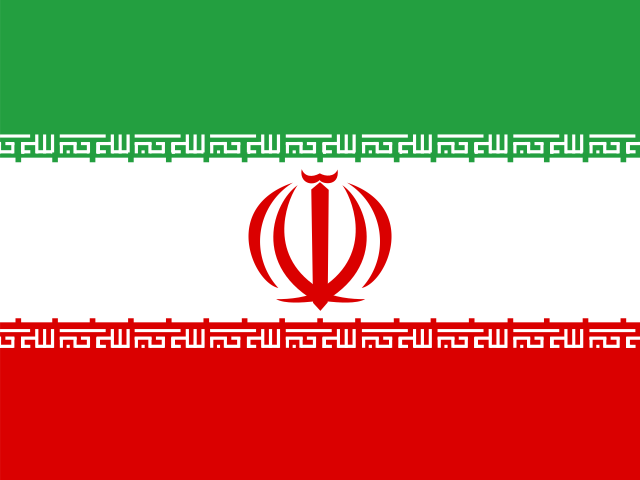
 Iran
Iran ranks #15 of 242 on the Composite Power Index (7.7/100), scored on military spending, active personnel, nuclear arsenal, economic size and logistics. Its Instability Index is 76.3/100 (#23 most fragile). Every figure below carries its source and year. Data read 2026-10-22.
Analyst briefing
Iran: Energy Scale, Thin and Dated Financial Record
Economic foundation
Iran's economy was worth $475.3 billion in 2024, per World Bank WDI, with a population of 91.6 million the same year. Output per person comes to about $5,190 on the World Bank's 2024 figures. The IMF's World Economic Outlook projects general government debt at 37.3 percent of GDP for 2026. A debt ratio at that level says little on its own about fiscal room, since the file contains no revenue, budget or external-financing data to set against it.
The reserves entry requires a flag rather than an analysis. The World Bank figure in this dataset is $7.7 billion for 1982. That is a 44-year-old reading and carries no information about Iran's current external position. No contemporary reserves figure is available here, and none should be inferred from the one on file.
Military posture
SIPRI's 2025 figures put military expenditure at $7.4 billion, or 2.092 percent of GDP on SIPRI's accounting. Dollar-denominated spending figures for Iran depend heavily on the exchange rate applied, and the dataset does not state which rate SIPRI used, so the absolute total should be treated as less robust than the GDP share.
The Correlates of War National Material Capabilities series, current to 2022, records 610,000 active personnel and a Composite Index of National Capability score of 0.0164. CINC measures a state's share of global totals across six components, placing Iran at roughly 1.6 percent of measured world capability in that year. The gap between a force of 610,000 and a reported budget of $7.4 billion is wide; the file offers no data on paramilitary forces, proxy funding or off-budget military spending that would help explain it.
This dataset contains no nuclear warhead figure for Iran. That absence is a gap in the data, not a finding about Iran's program, and nothing in this file speaks to nuclear status either way.
Governance indicators
V-Dem's v15 release scores Iran for 2025 at 0.159 on electoral democracy and 0.103 on liberal democracy, both zero-to-one scales. State capacity is scored at 0.209, the lowest of the three readings.
Energy
Energy is where Iran's measured weight sits. Our World in Data records oil production of 2,726.7 TWh and gas production of 2,629.2 TWh, both 2024 figures, against domestic primary energy of 12.92 exajoules in 2024 and electricity generation of 395.8 TWh in 2025. The file holds no export, pricing or revenue data, so the fiscal value of that output cannot be stated.
Data gaps
Missing: current reserves, warhead estimates, paramilitary manpower, arms transfers, sanctions exposure, conflict events. Manpower is three years behind the spending data.
Sources: World Bank WDI, IMF WEO, SIPRI Milex, COW NMC, V-Dem v15, Our World in Data (Energy).
Written from the sourced figures on this page and checked against them before publication — any figure not present in the data blocks the briefing. Generated 2026-10-06.
What drives the instability score
Capability and economy · click a metric to compare
CINC is a composite index (already contains military spending, personnel, energy & population) — shown for reference; it is not added into the Composite Power Index to avoid double-counting. Each figure carries its own source year; vintages can differ.
Capability profile
Trajectory
Governance
Energy
Strategic Relationships
Allies (13)
- Russiadefense 1942
- Syriaentente 2006
- Azerbaijannonaggression 2005
- Pakistannonaggression 2002
- Tajikistannonaggression 2002
- Turkmenistannonaggression 2002
- Uzbekistannonaggression 2002
- Afghanistannonaggression 2002
- Chinanonaggression 2002
- United Statesentente 1959
- Iraqnonaggression 1955
- Türkiyenonaggression 1955
- United Kingdomnonaggression 1955
COW alliance ties — includes historical pacts; defense first.
Neighbours (15)
Disputes (151)
COW Dyadic MID, 1816–2014 — historical register, not live rivalries. Count = militarized disputes; year = most recent; ● = peak intensity.
- Afghanistan16× · 2014
- Türkiye13× · 2014
- Pakistan4× · 2014
- United States18× · 2013
- India1× · 2013
- Saudi Arabia8× · 2012
- Iraq31× · 2011
- Azerbaijan4× · 2011
- Israel1× · 2010
- United Arab Emirates5× · 2004
- Qatar4× · 2004
- United Kingdom9× · 2003
Signals
Conflict forecast (ViEWS, 2029-04-01): 68% risk
Arms imports (SIPRI Arms Transfers, 2023): 2 transfers
Displacement (UNHCR): 157.9K refugees originated · 0 IDPs · 770.5K hosted
Compare Iran with
 Afghanistan
 United Arab Emirates
 Armenia
 Azerbaijan
 Bahrain
Neighbours and leading powers — each links to its own sourced dossier.