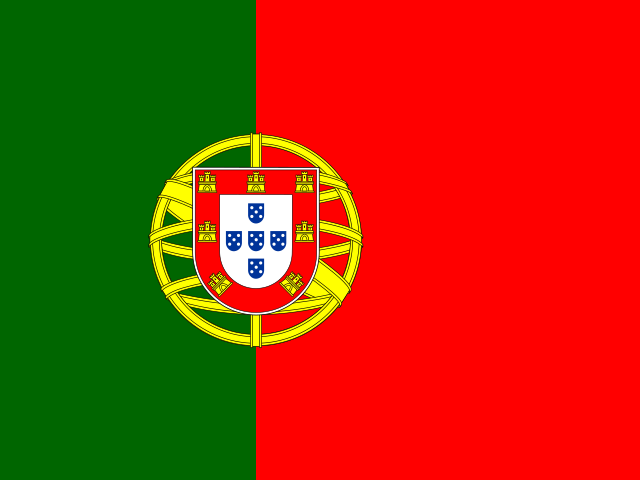
 Portugal
 ranks #60 of 242 on the Composite Power Index (1.4/100), scored on military spending, active personnel, nuclear arsenal, economic size and logistics. Its Instability Index is 15.1/100 (#158 most fragile). Every figure below carries its source and year. Data read 2026-10-22.
Analyst briefing
Portugal: Strong Governance Scores Amid Elevated Public Debt
Portugal's economy was valued at $313.3 billion in 2024, per the World Bank's WDI data, with GDP per capita of $29,292 across a population of 10.7 million the same year. The IMF's World Economic Outlook projects government debt at 85.6 percent of GDP for 2026. Reserves stood at $15.12 billion in 2025, per IMF IFS.
Military Spending and Capacity
SIPRI's 2025 figures put military spending at $5.9 billion, equal to 1.711 percent of GDP under SIPRI's own GDP series. That ratio should not be recalculated against the World Bank's GDP figure, since the two series are not interchangeable. The Correlates of War National Material Capabilities dataset recorded 27,000 active personnel in 2022 — the smallest force by headcount in this comparison set — with a CINC score of 0.0012, also the lowest recorded here. Both figures are three years older than the 2025 spending data.
Governance
Portugal posts strong governance scores across the board in V-Dem's 2025 data: electoral democracy at 0.822, liberal democracy at 0.717, and state capacity at 0.887. All three figures are among the highest in this batch, with a relatively narrow spread between the electoral and liberal democracy measures compared with other countries covered here.
Energy
Primary energy consumption was 0.9729 exajoules in 2024, per Our World in Data, the smallest among the countries covered here, with electricity generation of 51.13 TWh in 2025. Oil and gas production are both recorded at 0.0 TWh, dated 2016 — consistent with Portugal having no significant domestic hydrocarbon production, though that figure is nearly a decade old.
Data Gaps
No personnel or CINC data newer than 2022 are present, and oil and gas production figures are fixed at 2016. No nuclear or alliance data appear here.
Sources: World Bank WDI, IMF WEO, IMF IFS, SIPRI Milex, COW NMC, V-Dem v15, Our World in Data (Energy)
Written from the sourced figures on this page and checked against them before publication — any figure not present in the data blocks the briefing. Generated 2026-10-06.
What drives the instability score
Capability and economy · click a metric to compare
CINC is a composite index (already contains military spending, personnel, energy & population) — shown for reference; it is not added into the Composite Power Index to avoid double-counting. Each figure carries its own source year; vintages can differ.
Capability profile
Trajectory
Governance
Energy
Strategic Relationships
Allies (18)
- Czechiadefense 1999
- Hungarydefense 1999
- Polanddefense 1999
- Greecedefense 1992
- Germanydefense 1990
- Belgiumdefense 1988
- Spaindefense 1988
- Francedefense 1988
- United Kingdomdefense 1988
- Italydefense 1988
- Luxembourgdefense 1988
- Netherlandsdefense 1988
- Türkiyedefense 1951
- United Statesdefense 1949
COW alliance ties — includes historical pacts; defense first.
Disputes (41)
COW Dyadic MID, 1816–2014 — historical register, not live rivalries. Count = militarized disputes; year = most recent; ● = peak intensity.
Signals
Conflict forecast (ViEWS, 2029-04-01): 0% risk
Arms imports (SIPRI Arms Transfers, 2025): 2 transfers
21% of imports from United States — supplier dependence
Displacement (UNHCR): 109 refugees originated · 0 IDPs · 70.3K hosted
 Spain
 Morocco
 United States
 China
 Russia