 Argentina
 ranks #38 of 242 on the Composite Power Index (2.8/100), scored on military spending, active personnel, nuclear arsenal, economic size and logistics. Its Instability Index is 24.7/100 (#107 most fragile). Every figure below carries its source and year. Data read 2026-10-22.
Analyst briefing
Argentina: Middling Military Outlay Against a High Debt Projection
Argentina's economy was valued at $638.4 billion in 2024, per the World Bank's WDI data, with GDP per capita of $13,970 — the highest of the countries in this batch — across a population of 45.7 million. The IMF's World Economic Outlook projects government debt at 70.4 percent of GDP for 2026, against reserves of just $32.5 billion in 2025 per IMF IFS figures, a reserve base well below half of the debt projection in dollar terms relative to GDP.
Military Spending and Capacity
SIPRI's 2025 figures place military spending at $3.9 billion, or 0.563 percent of GDP under SIPRI's own GDP series — one of the lower ratios in this group. That ratio should not be recomputed against the World Bank's GDP figure, since SIPRI's milex-to-GDP share is tied to its own GDP series. The Correlates of War National Material Capabilities dataset recorded 72,000 active personnel in 2022 and a CINC score of 0.00448, both dated three years before the SIPRI spending figure.
Governance
Argentina's V-Dem 2025 scores are comparatively strong within this set: electoral democracy at 0.690 and liberal democracy at 0.524, with state capacity at 0.577. The gap between electoral and liberal democracy scores suggests stronger competitive elections than constraints on executive power, though both remain well above several other countries in this batch.
Energy
Argentina consumed 3.5392 exajoules of primary energy in 2024, per Our World in Data, with electricity generation of 153.15 TWh — though that electricity figure is dated 2025, a year later than the primary energy figure. Oil production reached 681.964 TWh in 2024, substantially exceeding gas production of 441.133 TWh the same year — both figures current to 2024 and directly comparable.
Data Gaps
No personnel or CINC figures newer than 2022 appear in this record, leaving a three-year gap against the 2025 financial and spending data. No nuclear or alliance figures are present. The 2026 debt figure is an IMF projection rather than a recorded outturn, and given Argentina's history of macroeconomic volatility, that forward-looking status is worth keeping in mind when weighing it against the firmer, backward-looking reserves and spending figures.
Sources: World Bank WDI, IMF WEO, IMF IFS, SIPRI Milex, COW NMC, V-Dem v15, Our World in Data (Energy)
Written from the sourced figures on this page and checked against them before publication — any figure not present in the data blocks the briefing. Generated 2026-10-06.
What drives the instability score
Capability and economy · click a metric to compare
CINC is a composite index (already contains military spending, personnel, energy & population) — shown for reference; it is not added into the Composite Power Index to avoid double-counting. Each figure carries its own source year; vintages can differ.
Capability profile
Trajectory
Governance
Energy
Strategic Relationships
Allies (34)
- Belizedefense 1991
- Guyanadefense 1991
- Canadadefense 1989
- St. Kitts and Nevisdefense 1984
- Bahamasdefense 1982
- Antigua and Barbudadefense 1981
- St. Vincent and the Grenadinesdefense 1981
- Dominicadefense 1979
- St. Luciadefense 1979
- Surinamedefense 1977
- Grenadadefense 1975
- Jamaicadefense 1969
- Barbadosdefense 1967
- Trinidad and Tobagodefense 1967
COW alliance ties — includes historical pacts; defense first.
Disputes (70)
COW Dyadic MID, 1816–2014 — historical register, not live rivalries. Count = militarized disputes; year = most recent; ● = peak intensity.
Signals
Conflict forecast (ViEWS, 2029-04-01): 0% risk
Arms imports (SIPRI Arms Transfers, 2025): 5 transfers
46% of imports from United States — supplier dependence
Displacement (UNHCR): 542 refugees originated · 0 IDPs · 4.9K hosted
 Bolivia
 Brazil
 Chile
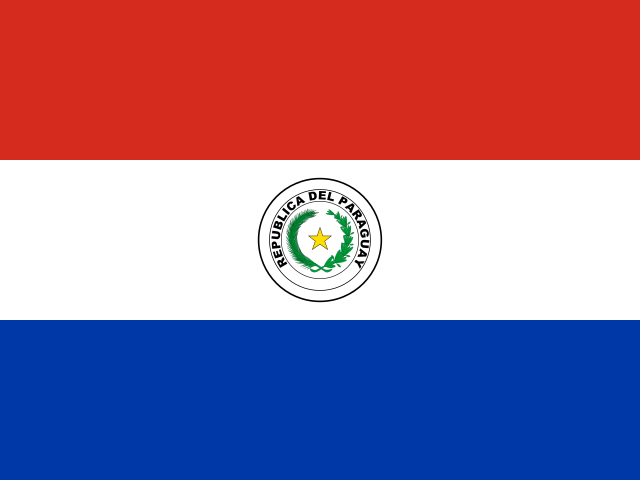 Paraguay
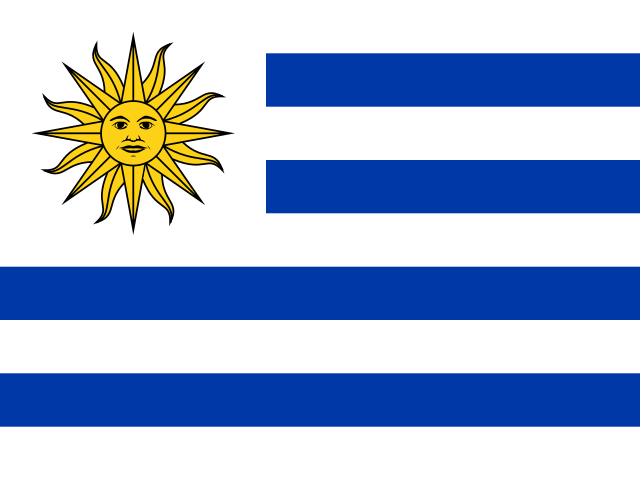 Uruguay