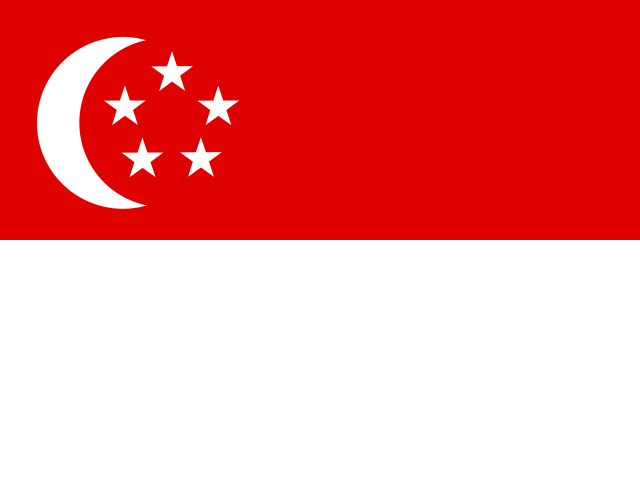
 Singapore
 ranks #53 of 242 on the Composite Power Index (1.8/100), scored on military spending, active personnel, nuclear arsenal, economic size and logistics. Its Instability Index is 12.5/100 (#181 most fragile). Every figure below carries its source and year. Data read 2026-10-22.
Analyst briefing
Singapore: High Debt Ratio Paired With Large Reserves and Top Governance Score
Singapore's economy was valued at $547.4 billion in 2024, per the World Bank's WDI data, with GDP per capita of $90,674 — by far the highest in this comparison set — across a population of 6.0 million. The IMF's World Economic Outlook projects government debt at 171.9 percent of GDP for 2026, the highest debt ratio in this batch by a wide margin. That sits alongside reserves of $404.9 billion in 2025 per IMF IFS data, a reserve stock equal to roughly three-quarters of 2024 GDP and far larger in both absolute and relative terms than any other country covered here. The facts available do not explain the relationship between the high debt ratio and the large reserve stock, and none should be inferred beyond what is stated.
Military Spending and Capacity
SIPRI's 2025 figures place military spending at $17.4 billion, or 3.046 percent of GDP under SIPRI's own GDP series — the highest spending share in this group. That ratio should not be recalculated against the World Bank's GDP figure, since SIPRI's share is computed against its own GDP series. The Correlates of War National Material Capabilities dataset recorded 51,000 active personnel in 2022, with a CINC score of 0.00247 — both three years older than the 2025 spending figure.
Governance
Singapore's V-Dem 2025 state capacity score of 0.974 is the highest recorded in this set, far exceeding its electoral democracy score of 0.434 and liberal democracy score of 0.360. That divergence — strong administrative capacity paired with comparatively lower electoral and liberal democracy scores — is the widest gap among the measures reported here.
Energy
Primary energy consumption was 3.7941 exajoules in 2024, per Our World in Data, with electricity generation of 60.15 TWh in 2025. Oil and gas production are both recorded at 0.0 TWh in 2016, consistent with Singapore's lack of domestic hydrocarbon production, though that figure is nearly a decade old and not necessarily representative of current conditions.
Data Gaps
No personnel or CINC data newer than 2022 are present, and oil and gas production figures are fixed at 2016. No nuclear or alliance data appear in this record. The 171.9 percent debt figure is an IMF projection for 2026 and should not be read in isolation from the reserves figure without the caveat that no facts here establish a causal link between the two.
Sources: World Bank WDI, IMF WEO, IMF IFS, SIPRI Milex, COW NMC, V-Dem v15, Our World in Data (Energy)
Written from the sourced figures on this page and checked against them before publication — any figure not present in the data blocks the briefing. Generated 2026-10-06.
What drives the instability score
Capability and economy · click a metric to compare
CINC is a composite index (already contains military spending, personnel, energy & population) — shown for reference; it is not added into the Composite Power Index to avoid double-counting. Each figure carries its own source year; vintages can differ.
Capability profile
Trajectory
Governance
Energy
Strategic Relationships
Signals
Conflict forecast (ViEWS, 2029-04-01): 0% risk
Arms imports (SIPRI Arms Transfers, 2025): 6 transfers
50% of imports from United States — supplier dependence
Displacement (UNHCR): 43 refugees originated · 0 IDPs · 0 hosted
 Indonesia
 Malaysia
 United States
 China
 Russia