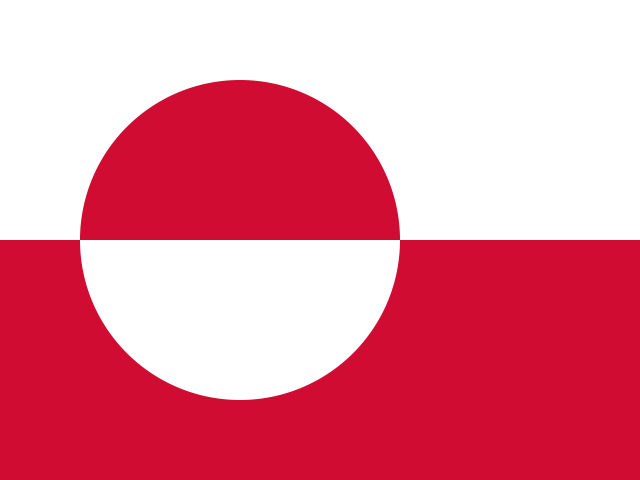
 Greenland
 ranks #107 of 242 on the Composite Power Index (0.5/100), scored on military spending, active personnel, nuclear arsenal, economic size and logistics. Every figure below carries its source and year. Data read 2026-10-22.
Analyst briefing
Greenland: Thin Data Reflects an Autonomous Territory's Limited Independent Reporting
Greenland's economy was valued at $3.33 billion in 2023, with per-capita output of $58,498.97 for the same year, per World Bank WDI figures. Population stood at 56,836 in 2024, also per World Bank WDI. The gap between the GDP year (2023) and the population year (2024) means the two figures should not be treated as a single-year snapshot.
Governance and Defense — No Data
This bundle contains no governance indicators (electoral democracy, liberal democracy, or state capacity scores) and no defense or security metrics (military spending, personnel, or composite index of national capability) for Greenland. As an autonomous territory within the Kingdom of Denmark, Greenland is typically not scored as an independent state by the datasets used elsewhere in this product, which explains the absence rather than indicating a deliberate gap in collection. No government debt, reserves, or fiscal figures are available either.
Energy
Greenland's energy profile is correspondingly small in absolute terms: primary energy consumption was just 0.0095 exajoules in 2023, per Our World in Data's energy series, with electricity generation of 0.6 terawatt-hours in 2024 from the same source. Both oil and gas production are recorded at 0.0 terawatt-hours, but that figure dates to 2016, per Our World in Data.
Data Gaps
This is one of the thinnest profiles in this product's coverage. Beyond GDP, GDP per capita, population, and four energy figures, no other metric is available: no governance scores, no military spending or personnel figures, no debt or reserves data. The 2016 oil and gas production figures are a decade old and, given Greenland's limited hydrocarbon sector, may simply reflect a long-standing absence of production rather than a recent change — but this bundle has no updated series to confirm that either way. Analysts should treat Greenland's entry as a partial picture driven by its status as an autonomous territory rather than a fully sovereign reporting unit, and should not infer governance or defense characteristics from neighboring entries, since none are present here.
Sources: World Bank WDI, Our World in Data (Energy).
Written from the sourced figures on this page and checked against them before publication — any figure not present in the data blocks the briefing. Generated 2026-10-06.
Capability and economy · click a metric to compare
Capability profile
Insufficient factors.
Trajectory
Energy
Strategic Relationships
Allies (0)
No alliance data loaded.
Neighbours (0)
No contiguity data.
Disputes (0)
COW Dyadic MID, 1816–2014 — historical register, not live rivalries. Count = militarized disputes; year = most recent; ● = peak intensity.
No militarized disputes recorded (COW MID).
Signals
Compare Greenland with
 United States
 China
 Russia
 India
 North Korea
Neighbours and leading powers — each links to its own sourced dossier.